


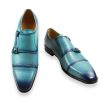
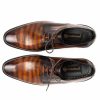


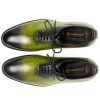


Penny loafers for men are the most versatile slip-on shoes you can own, but choosing the right pair involves more decisions than most buyers realize. You’re standing in front of three pairs that look nearly identical. One is brown, one is black, one is burgundy. They’re all priced differently. You have no idea which color works with your wardrobe, what quality you’re actually getting, or whether you should size up or down. You’re stuck, unsure which choice you’ll regret less.
Penny loafers seem simple—just a slip-on shoe with a strap across the vamp. But choosing the right pair involves navigating color versatility, construction quality, fit peculiarities, formality levels, and style compatibility. Make the wrong choice and you’ve wasted $100-300 on shoes that don’t work with your wardrobe or hurt your feet.
This guide solves every decision point: which color to buy first, how to assess quality construction, how to get proper fit, what formality levels they work for, and how to style them from casual to business settings. By the end, you’ll know exactly which penny loafers for men to buy for your specific needs.
Problem #1: Which Color Penny Loafers for Men Should You Buy?
🔴 The Issue
Every guide says “brown is versatile” but you don’t know if that means light brown, dark brown, or cognac. You own mostly navy and grey pants—will brown work? Should you buy black for formal occasions? What about burgundy or tan?
Why this matters: Color determines versatility. The wrong color limits which 70% of your wardrobe works with the shoes. A brown penny loafer that pairs with 8 pants colors delivers far more value than black penny loafers that work with only 3 colors.
✅ The Solution: Color Priority Framework
First Purchase: Medium to Dark Brown (Most Versatile)
Why brown wins: Works with the widest range of trouser colors and formality levels.
Pairs excellently with:
- Navy (all shades) – your most common pant color
- Grey (charcoal to light grey)
- Olive and earth tones
- Khaki and tan chinos
- Cream and stone linen
- Denim (dark indigo to medium wash)
Avoid pairing brown with: Black trousers (creates contrast that doesn’t work aesthetically)
Formality range: Business casual to smart casual. Works with suits in relaxed office environments.
Second Purchase: Black (Formal Backup)
Buy black penny loafers only if:
- Your office requires more formal footwear regularly
- You wear black suits or trousers frequently
- You need shoes for conservative business settings
Pairs with:
- Black trousers and suits
- Charcoal grey suits
- Navy (though brown often looks better)
Limited by: Can’t wear with earth tones, lighter colors, or casual fabrics without looking mismatched
Formality range: Business casual to business formal (but not the most formal—oxfords/derbies rank higher)
Third Purchase: Cognac/Tan (Summer & Casual)
Buy lighter brown tones when:
- You have brown penny loafers already
- You want summer-specific footwear
- Your style skews casual and relaxed
Pairs best with: Light colors (cream, stone, light grey, white), navy, olive, summer fabrics
Formality range: Smart casual to casual only
Special Colors (Burgundy, Oxblood, Suede)
Burgundy/Oxblood penny loafers:
- Buy fourth after brown, black, and cognac
- Pairs with: Navy, grey, olive, denim
- Adds visual interest to business-casual outfits
- Similar versatility to brown but makes a statement
Suede penny loafers:
- Inherently more casual than leather
- Only for dry weather (suede + rain = disaster)
- Best in brown, grey, or navy
- Works for smart-casual and weekend wear only
🥇 BROWN (Buy First)
Versatility: 9/10
Works with 80% of typical wardrobe
Formality: Business casual to casual
Investment priority: Essential
🥈 BLACK (Buy Second)
Versatility: 5/10
Works with 40% of typical wardrobe
Formality: Business formal to business casual
Investment priority: Conditional
🥉 COGNAC (Buy Third)
Versatility: 6/10
Works with 50% of wardrobe (seasonal)
Formality: Smart casual to casual
Investment priority: Optional upgrade
🎨 BURGUNDY (Buy Fourth)
Versatility: 7/10
Works with 60% of wardrobe
Formality: Business casual to smart casual
Investment priority: Style statement
🎯 DECISION TOOL: Which Penny Loafers for Men Should You Buy?
Answer These Questions to Get Your Personalized Recommendation
STEP 1: Assess Your Wardrobe
What color pants do you wear most often?
- ✅ If NAVY or GREY dominate → Buy BROWN penny loafers
- ✅ If BLACK trousers/suits dominate → Buy BLACK penny loafers
- ✅ If earth tones (olive, khaki, tan) dominate → Buy BROWN penny loafers
- ✅ If your style is preppy/coastal → Buy COGNAC penny loafers
STEP 2: Define Your Primary Use Case
Where will you wear these shoes most?
- ✅ Office (business casual) → BROWN leather (cognac to dark brown)
- ✅ Office (more formal) → BLACK leather
- ✅ Weekend casual + errands → BROWN leather or SUEDE
- ✅ Summer vacations/travel → COGNAC leather or TAN suede
- ✅ Date nights/dinners → BURGUNDY or DARK BROWN leather
STEP 3: Determine Quality Investment Level
How often will you wear these shoes?
- ✅ 3-5 times per week → Invest in hand-welted or Goodyear welted construction ($140-300)
- ✅ 1-2 times per week → Blake stitch or quality cemented ($90-180)
- ✅ Occasional (1-2 times per month) → Budget cemented acceptable ($60-100)
Learn more about construction quality here.
STEP 4: Choose Leather vs Suede
What’s your climate and lifestyle?
- ✅ Rainy climate or year-round wear → LEATHER only
- ✅ Dry/warm climate + casual style → SUEDE option available
- ✅ Office environment → LEATHER (suede too casual)
- ✅ Exclusively weekend/casual wear → Either leather or suede
📋 RECOMMENDED FIRST PURCHASE FOR MOST MEN:
Medium to Dark Brown Leather Penny Loafers
Construction: Goodyear welted or hand-welted if budget allows
Leather: Full-grain calfskin
Price range: $120-250
Why: Works with 80% of typical wardrobe, appropriate for business-casual through smart-casual, resoleable for longevity, classic style that never dates.
Problem #2: How Should Penny Loafers for Men Fit?
🔴 The Issue
You try on a pair and they feel snug across the top. The salesperson says “leather stretches” but you’re worried they’re too small. Or they feel comfortable immediately but your heel slips slightly when walking. You don’t know if you should size up, size down, or if the shoe just doesn’t fit your foot shape.
Why fit is critical for penny loafers: Unlike laced shoes where you can tighten for fit, penny loafers rely entirely on the vamp (top) gripping your foot correctly. Too loose and your heel slips with every step. Too tight and the shoe pinches uncomfortably.
✅ The Solution: Penny Loafer Fit Guide
Initial Fit (In Store or First Try-On):
Across the vamp (top of foot):
- Should feel snug but not painful
- Slight pressure across instep is correct
- No pinching or sharp pain points
- You should be able to slide foot in with moderate effort (not easy, not forcing)
Length:
- Thumb’s width (about 1/2 inch) between longest toe and shoe end
- Toes shouldn’t press against front of shoe when standing
- Some empty space at toe box is normal and correct
Heel:
- Should stay in place when walking forward
- Test by walking backwards—if shoe falls off, too big
- Slight heel lift on first step is acceptable initially (improves as leather molds)
- Consistent heel slippage throughout walking means wrong size
The Break-In Reality:
What changes: Leather stretches width-wise about 1/4 to 1/2 size as you wear it. The vamp loosens, conforming to your foot shape. The insole compresses slightly.
What doesn’t change: Length never stretches. A shoe that’s too short on day one is too short forever.
Timeline: 2-4 weeks of regular wear (20-30 wears) for complete break-in
Sizing Between Sizes:
If you’re between sizes (e.g., usually 9.5 but brand only offers 9 or 10):
- Size DOWN if: Your foot width is narrow to medium. The slightly snug fit across vamp will stretch to perfect fit.
- Size UP if: Your foot width is wide or you have high arches. You need the extra room even after accounting for stretch.
Common Fit Problems & Solutions:
Problem: Heel slips constantly
- Cause: Shoe is too large or wrong last shape
- Solution: Size down, or add tongue pads to reduce internal volume, or try different last shape
Problem: Pinching across ball of foot
- Cause: Shoe is too narrow for your foot width
- Solution: Size up, or find brand with wider last, or consider custom lasts
Problem: Top of foot hurts (vamp pressure)
- Cause: High instep + low vamp design
- Solution: This will NOT improve with break-in. Choose penny loafers with higher vamp cut or different style entirely
For proper fit, especially with backless variations like mule loafers, choosing the right shoe last for your foot shape becomes essential.
Problem #3: How Do I Know If I’m Getting Quality?
🔴 The Issue
One pair of brown penny loafers costs $80. Another costs $200. Both claim “genuine leather” and “quality construction.” You can’t tell the difference from photos or even holding them in-store. You don’t want to overpay for marketing, but you also don’t want to buy garbage that falls apart in a year.
✅ The Solution: Quality Inspection Checklist
Construction Method (Most Important):
When choosing the best penny loafers for men, construction method determines longevity and value.
Check for:
- Welted construction (hand-welted or Goodyear welt): Look for visible stitching channel around sole perimeter. Flex the shoe to see welt. Resoleable multiple times. $140-400.
- Blake stitch: Stitching visible on insole (inside shoe), sleeker profile. Resoleable 1-2 times. $90-250.
- Cemented: No visible stitching, sole appears glued. NOT resoleable. $30-120.
How to check online: Read product description. Quality makers explicitly state construction method. If construction isn’t mentioned, assume cemented (glued).
How to check in-store: Flex the sole and look along edge where sole meets upper. Welted = visible stitching. Cemented = smooth edge.
According to Gentleman’s Gazette’s guide to welted construction, Goodyear welted shoes can be resoled 5-7 times over their lifetime, making them significantly more economical than cemented alternatives.
Full guide: Handmade vs Mass-Produced Construction
Leather Quality:
What to look for:
- “Full-grain leather” = Best quality. Natural grain intact, develops beautiful patina, most durable. $150+
- “Top-grain leather” = Good quality. Sanded and stamped with artificial grain. Won’t patina as well. $100-200
- “Genuine leather” = Marketing term for lowest grade. Bonded leather scraps. Cracks/peels in 1-2 years. $40-90
The Leather Working Guide explains that full-grain leather uses the top layer of hide with natural grain intact, making it the most durable and premium option available.
Visual check: Full-grain shows natural variations, slight texture differences. Corrected grain looks artificially uniform with stamped pattern.
Interior Lining:
Best to worst:
- Leather lining (goat, kid, calfskin): Breathable, molds to foot, naturally antimicrobial
- Pigskin lining: Moderate breathability, decent quality
- Synthetic lining: Doesn’t breathe, causes sweating, breaks down faster
How to check: Feel inside shoe. Leather is soft, supple, with natural texture. Synthetic feels plasticky and smooth.
Best Penny Loafers for Men: Quality Checklist
Detail Quality:
Stitching:
- Even, tight stitching with consistent spacing = quality
- Loose threads, uneven stitching, gaps = poor construction
Penny strap hardware:
- Leather strap should be same thickness as shoe upper
- Stitching securing strap should be reinforced and even
Sole edge finishing:
- Hand-burnished or painted edges = quality craftsmanship
- Rough, unfinished edges = cost-cutting
Insole:
- Remove insole if possible—full leather insole with cork layer underneath = quality welted construction
- Cardboard or foam = cemented budget construction
Problem #4: Where Can Men Actually Wear Penny Loafers?
🔴 The Issue
You’ve heard penny loafers are “versatile” but you don’t know if that means you can wear them to your office, to a wedding, or just on weekends. Different sources give conflicting advice. You need clarity on exactly which occasions work and which don’t.
✅ The Solution: Penny Loafer Formality Matrix
| Occasion | Appropriate? | Color | Pairing Notes |
|---|---|---|---|
| Conservative Business (Law, Finance) | ❌ NO | N/A | Too casual—requires laced oxfords |
| Business Casual Office | ✅ YES | Brown, Black | With suits, dress trousers, chinos + blazer |
| Creative/Tech Office | ✅ YES | Any color | Works with full range from suits to jeans |
| Job Interviews | ⚠️ AVOID | N/A | Better to overdress slightly—wear laced shoes |
| Weddings (Formal/Black Tie) | ❌ NO | N/A | Requires formal laced dress shoes |
| Weddings (Cocktail Attire) | ⚠️ RISKY | Black only | Only if dress code is on casual end of cocktail |
| Weddings (Casual/Beach) | ✅ YES | Brown, Cognac | Perfect for linen suits, casual summer weddings |
| Date Night (Upscale Restaurant) | ✅ YES | Brown, Burgundy | With dark jeans or chinos, blazer optional |
| Weekend Casual | ✅ YES | Any color | With chinos, jeans, casual trousers |
| Travel/Flying | ✅ YES | Any color | Easy TSA removal, comfortable for long flights |
| Funerals | ❌ NO | N/A | Too casual—requires black laced dress shoes |
General Formality Rules:
- Penny loafers rank: More formal than sneakers, less formal than laced dress shoes
- Formality ceiling: Business casual is the maximum. Never appropriate for black-tie, formal business, or traditional corporate settings
- Casual floor: More polished than necessary for athletic activities, yard work, or extremely casual settings
- Sweet spot: Smart casual to business casual—where penny loafers excel
How to Style Penny Loafers: Quick Reference Guide
Penny loafers for men work across a wide formality range from smart casual to business casual, making them one of the most versatile shoes in a man’s wardrobe.
With Suits:
- Business casual offices: Navy or grey suit + brown penny loafers
- Skip the tie: Keeps the look appropriately relaxed for penny loafers
- Fabric choice: Cotton or wool suits work; skip penny loafers with sharkskin or very formal suit fabrics
- Black penny loafers: With charcoal or navy suits only in formal business-casual settings
With Trousers & Chinos:
- Brown penny loafers: Navy, grey, olive, khaki, cream chinos or dress trousers
- Black penny loafers: Black, charcoal, navy trousers only
- Fit: Slim or straight leg, hemmed to show 1-2 inches of ankle
- Avoid: Baggy or cargo-style pants
With Jeans:
- Best denim: Dark indigo to medium wash, slim or straight fit
- Avoid: Distressed, light wash, or overly casual denim
- Hem length: Clean hem with slight cuff or cropped to show ankle
- Top pairing: Button-down shirts, polos, casual sweaters (balance casual jeans with slightly more polished tops)
Socks or No Socks:
- Traditional styling: Wear dress socks matching trouser color
- Modern casual styling: No-show liner socks or sockless in warm weather
- Business settings: Wear socks unless office culture is very casual
- Never: White athletic socks with penny loafers
Maintaining Your Penny Loafers
Essential maintenance extends life 5-10X:
After Each Wear (30 seconds):
- Brush with horsehair brush to remove dirt
- Insert cedar shoe trees while leather is warm
- Allow 24 hours rest before next wear
As Allen Edmonds’ shoe care guide recommends, insert cedar shoe trees immediately after each wear while leather is still warm to absorb moisture and maintain shape.
Monthly Maintenance:
- Apply leather conditioner (every 8-12 wears)
- Polish with cream polish for color maintenance
- Check penny strap stitching and sole condition
Long-Term Care:
- First resole: 3-7 years depending on wear frequency (welted shoes only)
- Heel replacement: Every 1-2 years if wearing frequently
- Professional refurbishment: Every 5 years (deep conditioning, re-finishing)
Quality handmade penny loafers reward proper care with decades of wear. Budget cemented construction cannot be maintained—when the sole fails, the shoe is disposed.
Common Penny Loafer Questions Answered
What color penny loafers should I buy first?
Brown or cognac is the most versatile first penny loafer. It pairs with navy, grey, olive, khaki, cream, and denim—covering 80% of typical wardrobes. Black penny loafers work only with black, charcoal, and navy trousers, limiting versatility. For maximum wardrobe flexibility, buy brown first. Add black second only if your office requires more formal footwear or you wear black suits frequently.
Can you wear penny loafers with a suit?
Yes, penny loafers work with suits in business-casual environments. Pair dark brown or black penny loafers with navy or grey suits. Skip the tie to keep the look appropriately relaxed. Avoid penny loafers with formal business suits in conservative industries (law, finance, consulting) where laced oxfords are expected. They work best in creative, tech, or relaxed office cultures. Never wear penny loafers with tuxedos or black-tie events.
Should penny loafers fit tight or loose?
Penny loafers should fit snug across the vamp (top of foot) when new—leather stretches width-wise about half a size as it breaks in. You should be able to slide your foot in with slight effort, but the shoe shouldn’t slip off easily. No heel slippage when walking. Too loose and your heel lifts with every step; too tight causes pinching across the ball of foot. If between sizes, size down—leather stretches width but never length.
Are penny loafers too casual for the office?
Depends on your office culture. Penny loafers work in business-casual environments (tech, creative, retail management, education) when paired with dress trousers or chinos and button-down shirts. They’re too casual for traditional corporate settings (law firms, banks, consulting) that expect laced dress shoes. If your office allows suits without ties or “smart casual,” penny loafers are appropriate. When in doubt, observe what senior people wear—if they wear loafers, you can too.
What’s the difference between penny loafers and other loafers?
Penny loafers have a leather strap across the vamp with a diamond-shaped cutout (originally for holding a penny). Horsebit loafers feature metal horsebit hardware. Tassel loafers have leather tassels hanging from laces on the vamp. Belgian loafers have a small bow. Venetian loafers have no ornamentation—completely plain vamp. Penny loafers are the most versatile and traditional American loafer style, working across the widest range of formality levels.
How long do quality penny loafers last?
Welted penny loafers (hand-welted or Goodyear welted) last 10-20+ years with proper care and 2-3 resoles. The upper leather, if maintained, outlasts multiple soles. Blake stitch penny loafers last 5-10 years with 1-2 possible resoles. Cemented (glued) penny loafers last 1-3 years and cannot be repaired—when the sole wears out or separates, the shoe is discarded. Construction method determines longevity more than initial price.
Your Penny Loafer Buying Checklist
Before clicking “buy” on any penny loafer, verify:
- Color choice: Brown first for versatility, black only if office requires
- Construction method: Welted (hand or Goodyear) for frequent wear, Blake stitch acceptable for occasional
- Leather quality: “Full-grain leather” specified, not just “genuine leather”
- Lining material: Leather lining (goat, kid, calf) not synthetic
- Fit verification: Snug vamp, proper length, minimal heel slip when walking
- Use case match: Formality level appropriate for where you’ll wear them
- Price reflects quality: $140-300 for welted, $90-180 for Blake, under $100 = likely disposable
- Return policy: Minimum 30 days to ensure fit after break-in begins
Penny loafers are the most versatile slip-on shoe you can own—more polished than sneakers, more comfortable than laced dress shoes, appropriate for 80% of modern men’s occasions. But only if you choose the right color, ensure quality construction, get proper fit, and understand their formality range.
Now you have the framework to make informed decisions rather than guessing. You know brown beats black for versatility. You understand why $150 welted loafers cost less than $60 cemented shoes over time. You can assess quality construction in stores or online. You know exactly which occasions work and which don’t.
Ready to invest in penny loafers for men that actually work for your lifestyle? Explore our handmade penny loafer collection built with traditional hand-welted construction in McKinney, Texas.