


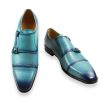




Here’s what nobody tells you: the construction method determines whether your loafers last 2 years or 20 years. It dictates whether they can be repaired or must be thrown away when the sole wears out. It affects comfort, water resistance, and whether your feet hurt after eight hours. And critically, it determines the real cost-per-wear—where “cheap” shoes often cost more over time than quality ones.
This isn’t about snobbery or luxury for its own sake. It’s about understanding why one shoe is actually three times better than another despite looking similar. By the end of this guide, you’ll know exactly what construction methods mean, how to identify them, and when spending more delivers genuine value versus marketing hype.
Problem: You Can’t Tell Quality from Looking at Shoes Online
🔴 The Issue
Every shoe brand claims “premium leather” and “quality craftsmanship.” Product photos look professional and polished. Reviews mention “comfortable” and “great value” for both $60 shoes and $300 shoes. You have no reliable way to distinguish genuinely well-made loafers from dressed-up cheap shoes with good marketing.
Why this happens: Construction happens inside the shoe where you can’t see it. Two shoes can look identical externally while being fundamentally different in how they’re built. Mass-produced brands intentionally mimic the appearance of handmade shoes—adding decorative stitching, using “premium” language, and photographing products to hide construction shortcuts.
The real cost: You buy what seems like a good deal, wear the shoes for 18 months, and the sole suddenly separates from the upper. You discover the shoe was glued together and cannot be repaired. You throw it away and buy another pair. Over a decade, you spend more money on disposable shoes than one pair of repairable quality shoes would have cost.
Understanding the Four Main Construction Methods
Shoe construction isn’t complicated—there are four primary methods, each with distinct characteristics, costs, and longevity. Once you understand these, you’ll immediately know what you’re buying.
1. Hand-Welted Construction (The Gold Standard)
How It’s Made:
A skilled craftsman hand-stitches a narrow strip of leather (the welt) to the shoe upper and insole using awls, needles, and thread. This creates a channel around the shoe’s perimeter. The outsole is then stitched to this welt strip. The entire process is done by hand, taking 8-12 hours of labor per pair.
Key Characteristics:
- Durability: 15-25+ years with proper care and 3-4 resoles
- Repairability: Fully resoleable multiple times—just replace the outsole
- Water Resistance: Excellent—stitched construction allows no glue weak points
- Comfort: Superior—cork layer molds to your foot over time
- Break-in: 2-4 weeks as leather conforms to foot shape
- Cost: $140-500+ depending on leather quality and maker
Visual Identification:
- Visible stitching channel running around sole perimeter
- Sole can be flexed to reveal welted construction underneath
- Hand-stitching often shows slight irregularities (proof of handwork)
- Cork layer visible if you remove insole
Best For:
Shoes you’ll wear frequently (3+ times per week), formal to smart-casual occasions, anyone wanting heirloom-quality footwear, people with foot problems who need shoes to mold to their feet.
✅ Why Hand-Welted Wins Long-Term
This is the construction method used by traditional shoemakers for centuries because it simply works better. The hand-stitched welt creates a mechanical bond—not chemical—that won’t fail over time. When the outsole wears down, a cobbler removes the old sole, cleans the welt, and stitches on a new sole. The upper leather, if cared for properly, lasts decades.
Real example: A $150 hand-welted loafer worn 150 days per year:
- Year 0: $150 initial purchase
- Year 5: $60 first resole (sole replacement)
- Year 10: $60 second resole
- Year 15: $60 third resole
- Total cost over 15 years: $330 = $22/year or $0.15 per wear
2. Goodyear Welt Construction (Machine-Welted)
How It’s Made:
Similar to hand-welted but uses a specialized machine (Goodyear welting machine) to stitch the welt to upper and insole. Invented in 1869, this industrialized the welted shoe construction process. A machine creates the stitching channel faster and more uniformly than hand-welting.
Key Characteristics:
- Durability: 10-20 years with proper care and 2-3 resoles
- Repairability: Fully resoleable, same as hand-welted
- Water Resistance: Excellent, though slightly less than hand-welted
- Comfort: Very good—cork layer molds to foot
- Break-in: 2-3 weeks
- Cost: $120-400 depending on brand and leather
Visual Identification:
- Perfectly uniform stitching around sole (machine precision)
- Visible welt strip and stitching channel
- Cork layer visible under insole
- Often stamped “Goodyear Welted” inside or on sole
Best For:
Those wanting repairable quality shoes at slightly lower cost than hand-welted, dress shoes for office wear, anyone wearing shoes 2-4 times per week.
Hand-Welted vs Goodyear Welt:
Functionally similar for most wearers. Hand-welting allows slightly more flexibility in construction (curved shapes, unique lasts) and produces marginally superior water resistance. Goodyear welting offers consistent quality at lower cost. Both are resoleable and durable. Choose based on budget and preference for artisan versus industrial process.
3. Blake Stitch Construction (Sleeker Profile)
How It’s Made:
The outsole is stitched directly to the insole through the shoe’s interior using a specialized Blake stitching machine. No welt strip exists—just a single line of stitching visible on the insole. This creates a sleeker, more flexible shoe with thinner profile than welted construction.
Key Characteristics:
- Durability: 5-10 years with 1-2 resoles possible
- Repairability: Resoleable but requires specialized Blake stitching machine (fewer cobblers can do it)
- Water Resistance: Moderate—stitching goes through entire shoe, creating potential water entry
- Comfort: Excellent flexibility, lighter weight, less break-in
- Break-in: Minimal (few days to 1 week)
- Cost: $90-350
Visual Identification:
- No visible welt strip—sole appears directly attached to upper
- Stitching visible on insole (inside shoe)
- Thinner sole profile, more elegant silhouette
- More flexible than welted shoes
Best For:
Dress shoes where sleek profile matters, Italian-style loafers, casual to smart-casual occasions, warmer climates (less water exposure), those prioritizing flexibility over maximum durability.
Trade-offs:
Blake stitch sacrifices some durability and water resistance for elegance and flexibility. Popular in Italian shoemaking tradition where aesthetics and light construction are prioritized. Cannot be resoled as many times as welted shoes—typically 1-2 times maximum before the upper is too damaged. Requires cobbler with Blake stitching machine.
4. Cemented Construction (Glued/Disposable)
How It’s Made:
The sole is glued to the upper using adhesive. No stitching connects sole to upper. Modern adhesives create strong initial bond but degrade over time from heat, moisture, and flexing. This is how 90%+ of mass-market shoes under $100 are constructed.
Key Characteristics:
- Durability: 1-3 years typical lifespan before sole separation
- Repairability: Cannot be resoled—adhesive fails, upper leather often poor quality, no economic repair possible
- Water Resistance: Poor—glue breaks down faster with moisture exposure
- Comfort: Varies—can be immediately comfortable but doesn’t improve with wear
- Break-in: Minimal to none
- Cost: $30-120 typically
Visual Identification:
- No visible stitching connecting sole to upper
- Sole appears smooth along attachment edge
- Often uses synthetic materials or bonded leather
- Lighter weight, less substantial feel
- Flexing the sole shows no visible construction details
When Cemented Construction Makes Sense:
Trendy styles you’ll wear 1-2 seasons, occasional-wear shoes (weddings, special events worn 3-5 times yearly), kids’ shoes (outgrown before worn out), experimental styles to test before investing, strict budget constraints where $60 now is all you can afford.
⚠️ The Cemented Construction Trap
Brands market cemented shoes with identical language used for quality construction: “premium leather,” “expert craftsmanship,” “Italian styling.” Photos hide construction. You discover it’s cemented only when the sole falls off 18 months later and a cobbler tells you it can’t be repaired.
How to avoid: Look for explicit construction description (welted, Blake stitch, stitched). If construction method isn’t mentioned, assume cemented. Check return policies—quality makers confident in construction offer longer guarantees.
Real Cost Analysis: Breaking Down the Numbers
10-Year Total Cost of Ownership
Scenario: You wear loafers for work and casual occasions, approximately 150 days per year (3 times per week).
| Construction | Initial Cost | Lifespan | Resole Cost | 10-Year Total | Cost/Year | Cost/Wear |
|---|---|---|---|---|---|---|
| Hand-Welted | $150 | 15+ years | $60 × 1 resole | $210 | $21/year | $0.14/wear |
| Goodyear Welt | $120 | 12 years | $60 × 1 resole | $180 | $18/year | $0.12/wear |
| Blake Stitch | $100 | 7 years | $70 × 1 resole | $270 (buy 2nd pair) | $27/year | $0.18/wear |
| Cemented | $60 | 2 years | Not repairable | $300 (5 pairs) | $30/year | $0.20/wear |
Key Findings:
- Goodyear welt offers best value: Lowest cost per year and per wear
- Cemented construction costs 67% more per year despite lowest initial price
- Break-even point: 3-4 years—quality shoes become cheaper after this point
- Environmental impact: 1 welted shoe vs 5+ cemented shoes in landfills
Beyond Construction: Other Quality Indicators
Construction method is the most important factor, but other elements separate excellent shoes from merely good ones.
Leather Quality
Full-Grain Leather (Highest Quality):
- Uses top layer of hide with natural grain intact
- Develops rich patina over time, improving with age
- Most durable and breathable
- Shows natural marks and texture (proof of authenticity)
- More expensive due to using only best hides
Top-Grain Leather (Good Quality):
- Top layer sanded to remove imperfections, then stamped with artificial grain
- More uniform appearance than full-grain
- Durable but won’t develop same patina
- Most common in $100-200 shoes
Genuine Leather (Marketing Term for Low Quality):
- Made from leather scraps bonded together with adhesive
- “Genuine leather” legally qualifies but is lowest grade
- Won’t last—cracks and peels within 1-2 years
- Found in budget shoes under $80
Corrected Grain (Lowest):
- Heavily sanded and finished to hide poor hide quality
- Thick plastic coating makes it stiff and non-breathable
- Won’t age well, cracks rather than patinas
Lining Material
The interior lining dramatically affects comfort and longevity:
- Goat or Kid Leather: Premium choice—soft, breathable, molds to foot, naturally antimicrobial
- Calfskin: Excellent quality, smooth and durable
- Pigskin: Good breathability, moderate durability
- Synthetic: Doesn’t breathe, causes sweating, breaks down faster, found in budget shoes
Quality handmade loafers use leather lining throughout, including the insole and heel counter. This allows the shoe to breathe and conform to your foot shape over time.
Lasting Process
The “last” is the foot-shaped form the shoe is built around. This determines fit and comfort more than almost any other factor.
- Custom or Semi-Custom Lasts: Shaped for different foot profiles (narrow, wide, high arch). Allows proper fit. Used by artisan makers.
- Generic Lasts: One-size-fits-all approach. Mass production standard. Works for average feet, uncomfortable for others.
This is why choosing the right shoe last matters as much as construction method—especially for backless loafers that rely on proper midfoot grip.
Finishing Details
Small details reveal manufacturing care:
- Edge Finishing: Hand-burnished edges vs rough-cut edges
- Stitching: Even, tight stitching vs loose, irregular stitching
- Hardware: Solid metal (brass, stainless) vs plated plastic
- Insole: Full leather insole vs cardboard composite
- Heel Stack: Stacked leather layers vs synthetic block
How to Identify Quality When Shopping
Your Quality Inspection Checklist
Online Shopping:
- Construction method explicitly stated (welted, Blake stitch, stitched)
- “Full-grain leather” specified (not just “leather” or “genuine leather”)
- Leather lining mentioned (check interior material)
- Maker provides construction details and process transparency
- Customer reviews mention durability over multiple years
- Resole services offered or recommended by maker
- Returns/warranty of 6+ months (quality makers stand behind product)
In-Store Inspection:
- Flex the sole—welted shoes show visible stitching channel
- Check sole edge for stitching (welted) vs smooth glue (cemented)
- Remove insole to see cork layer (welted) vs cardboard (cemented)
- Feel interior lining—should be soft leather, not plasticky synthetic
- Inspect stitching quality—even, tight, no loose threads
- Smell the shoe—real leather has distinct smell, synthetics smell chemical
- Check weight—quality shoes feel substantial but not heavy
When to Invest vs When to Save
Invest in Handmade/Welted Construction When:
- You’ll wear the shoes 2+ times per week
- The style is classic/timeless (penny loafers, oxfords, derbies)
- You have difficult feet that need custom lasts
- You want heirloom-quality shoes to pass down
- Your budget allows amortizing cost over 10+ years
- You care about environmental impact (fewer shoes in landfills)
- You value repair over replacement
Budget/Cemented Construction Acceptable When:
- Trendy style you’ll wear 1-2 seasons maximum
- Occasional-wear shoes (worn 5-10 times per year)
- Testing a new style before investing in quality version
- Children’s shoes (outgrown before worn out)
- Temporary need while saving for quality purchase
- Extremely tight budget with no flexibility
Making Quality Shoes Last: The Maintenance Factor
Even the best construction fails without proper care. Quality shoes require modest maintenance:
Essential Maintenance (5 minutes per wear):
- Brush after each wear: Horsehair brush removes dirt before it embeds
- Shoe trees immediately: Insert cedar trees while leather is warm
- Rotate pairs: Never wear same shoes consecutive days
- Rest 24+ hours: Leather needs time to dry from perspiration
Regular Maintenance (Monthly):
- Condition leather: Apply leather conditioner every 10-15 wears
- Polish when needed: Cream polish maintains color and protection
- Check for damage: Address loose stitching or worn spots early
- Clean lining: Wipe interior with damp cloth monthly
Professional Maintenance:
- First resole: At 3-7 years depending on wear frequency
- Subsequent resoles: Every 3-5 years
- Heel replacement: As needed (every 1-2 years for frequent wear)
- Refurbishment: Every 5-7 years (leather conditioning, re-finishing)
Cost math: $50/year in maintenance (shoe trees, polish, brushes) + $60 resole every 5 years = $62/year to keep $150 shoes in excellent condition for 15+ years. Compare to $180-300/year buying new cemented shoes every 2 years.
Common Questions About Shoe Construction
What is hand-welted construction in shoes?
Hand-welted construction uses a hand-sewn welt strip that connects the upper leather to the sole. A skilled craftsman stitches through the upper, welt, and insole, then attaches the outsole to the welt. This creates a durable, water-resistant bond that can be resoled multiple times. The process takes significantly longer than machine welting (8-12 hours per pair) but produces superior durability and comfort. The cork layer between insole and outsole molds to your foot over time, creating a custom fit.
How long do handmade loafers last compared to mass-produced?
Hand-welted or Goodyear welted loafers last 10-20+ years with proper care and 2-3 resoles. Mass-produced cemented (glued) loafers typically last 1-3 years before the sole separates from the upper and cannot be repaired. The construction method directly determines longevity—welted shoes can be completely rebuilt with new soles, while cemented shoes are disposable once the adhesive fails.
Are handmade loafers worth the extra cost?
Yes, if you plan to wear them regularly (2+ times per week). A $150 hand-welted loafer lasting 15 years with 2 resoles ($120 total) costs $18/year or $0.12 per wear. A $60 cemented loafer lasting 2 years costs $30/year or $0.20 per wear. Over a decade, handmade shoes save money while providing superior comfort, better fit as they mold to your feet, and can be passed down as heirlooms. The break-even point is typically 3-4 years.
Can cemented shoes be resoled?
No, cemented construction cannot be economically resoled. The adhesive bond cannot be reliably recreated, and the upper leather in budget cemented shoes is typically thin corrected-grain that won’t survive the resoling process. Most cobblers refuse cemented resole requests because the repair cost exceeds the shoe’s value and the repair often fails. When the sole wears out on cemented shoes, the entire shoe must be discarded.
What’s the difference between Goodyear welt and hand-welted?
Both use a welt strip to connect upper and sole, making them resoleable and durable. Hand-welted uses hand tools and takes 8-12 hours per pair, allowing more flexibility in shoe shapes and producing slightly superior water resistance. Goodyear welt uses a specialized machine invented in 1869, creating faster, more uniform construction at lower cost. For most wearers, the functional difference is minimal—both last 10-20+ years and can be resoled multiple times. Choose based on budget and preference for artisan versus industrial process.
Why do some expensive shoes still use cemented construction?
Some brands charge premium prices based on brand name, marketing, or fashion trends rather than construction quality. Luxury fashion houses often use cemented construction on $200-400 loafers because buyers purchase for the logo rather than longevity. Italian dress shoes sometimes use cemented construction for extremely light, flexible designs where aesthetics trump durability. Always check construction method regardless of price—expensive doesn’t guarantee quality construction.
The Bottom Line: Construction Determines Everything
When comparing loafers, construction method is the single most important factor determining value. It dictates longevity, repairability, comfort over time, and true cost of ownership. Two shoes can look identical in photographs but deliver wildly different performance based solely on how they’re constructed.
The shoe industry profits from consumer ignorance about construction. Mass-market brands use premium language (“quality craftsmanship,” “expert construction”) while hiding cemented construction that ensures you’ll need replacements every 2 years. Meanwhile, smaller makers producing genuinely superior hand-welted shoes struggle to communicate why their $150 loafers are actually cheaper than $60 disposable alternatives.
Your Quality Shoe Buying Framework
- Always ask or research the construction method before buying
- Prioritize welted or Blake stitch for shoes you’ll wear regularly
- Accept cemented construction only for trendy or occasional-wear shoes
- Calculate cost-per-wear over 10 years, not just initial price
- Verify “full-grain leather” and “leather lining” specifications
- Buy from makers who transparently describe their construction process
- Budget $50-75/year for maintenance to maximize quality shoe lifespan
- Build a rotation of 2-3 welted shoes rather than 6-8 cemented shoes
Quality construction isn’t luxury—it’s pragmatic economics. The difference between disposable and durable shoes is the difference between spending $300 per decade versus $300 per 18 months. The difference between wearing uncomfortable shoes that never improve versus shoes that mold to your feet. The difference between throwing away 10 pairs of shoes versus maintaining one excellent pair.
Now you understand what “hand-welted” actually means and why it matters. You can identify construction methods when shopping. You know when investing in quality delivers genuine value versus when budget options suffice. Most importantly, you’ll never again confuse marketing language with actual craftsmanship.
Ready to invest in shoes built to last? Explore our hand-welted collection or learn more about our traditional shoemaking process in McKinney, Texas.